Payment Processor Partnerships and Their Role in Shaping Withdrawal Timelines for Digital Gambling Operators
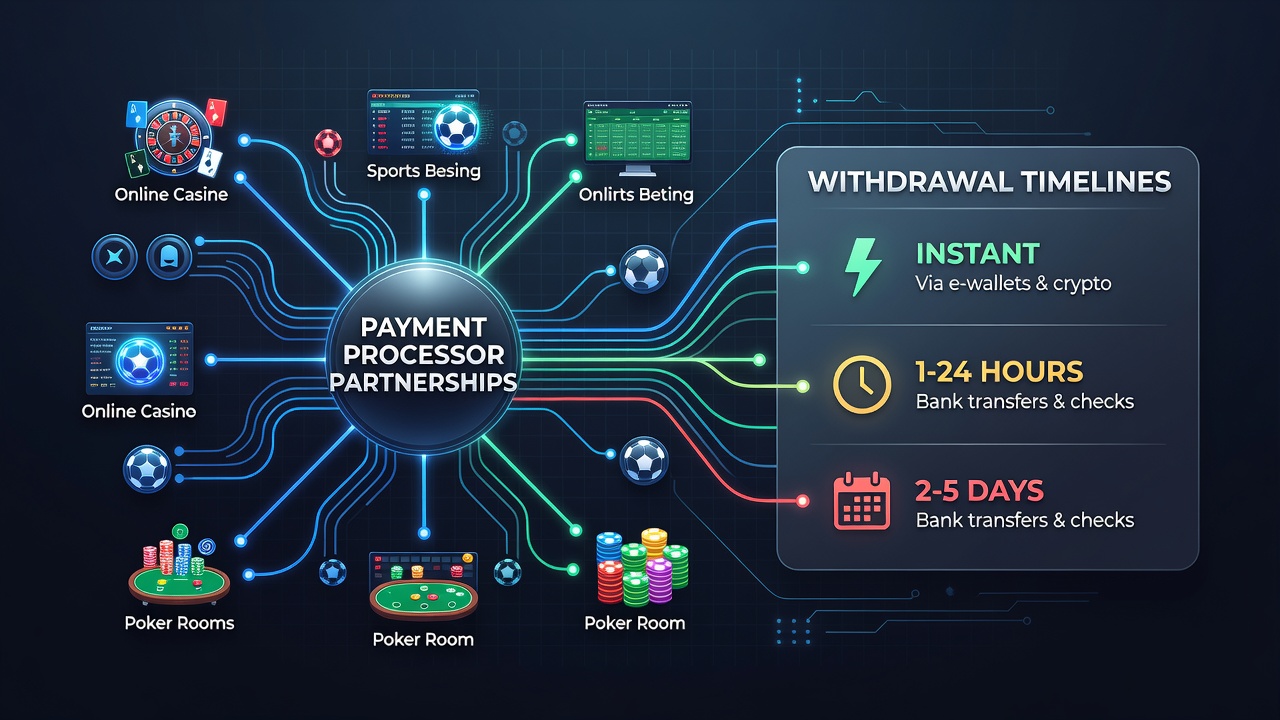
Payment processor partnerships determine how quickly funds move from digital gambling platforms back to players, and these relationships have grown more intricate since the mid-2010s. Operators select processors based on integration speed, compliance layers, and regional licensing agreements, which directly influence whether withdrawals clear in hours or stretch across several business days. Data from industry reports shows that direct API connections between platforms and processors often reduce verification steps, whereas layered banking intermediaries add delays for fraud screening and currency conversion.
Direct Integrations Versus Intermediary Chains
Processors such as those handling e-wallets maintain direct links with many platforms, allowing automated identity checks that complete within the same session. Bank transfers, by contrast, route through multiple correspondent banks in cross-border cases, and each hop introduces settlement windows that extend timelines. Researchers tracking transaction logs across European and North American markets found that platforms using single-hop processors averaged 4 to 12 hours for approved withdrawals, while multi-hop setups frequently required 48 to 72 hours. Those who've examined settlement data note that July 2026 marks the scheduled rollout of updated real-time settlement protocols in several Canadian provinces, which may shorten certain bank-linked payouts once the new rails activate.
Regional Licensing Shapes Processor Selection
Licensing bodies in different jurisdictions impose distinct requirements on processor partnerships, and operators adjust their choices accordingly. The Nevada Gaming Control Board requires processors to hold specific money transmitter licenses and maintain segregated accounts, which tends to favor established U.S. entities with local clearing capabilities. In Australia, the Australian Communications and Media Authority oversees similar standards yet permits a broader range of international processors when they demonstrate equivalent anti-money laundering controls. Platforms operating under multiple licenses therefore maintain parallel processor relationships, routing withdrawals through whichever partnership satisfies the strictest local rule set at the time of request.
Case Examples from Platform Data
One large operator switched from a traditional card processor to a specialized gambling-focused provider in 2024 and recorded a 60 percent reduction in average withdrawal duration according to internal metrics shared with analysts. Another platform retained its existing bank partner but added an e-wallet option for players who completed identity verification in advance, resulting in same-day payouts for that subset of users. Observers tracking these shifts point out that the choice of processor also affects chargeback exposure, since processors with stronger identity protocols tend to absorb fewer disputed transactions over time.
Emerging Technologies and Settlement Speed
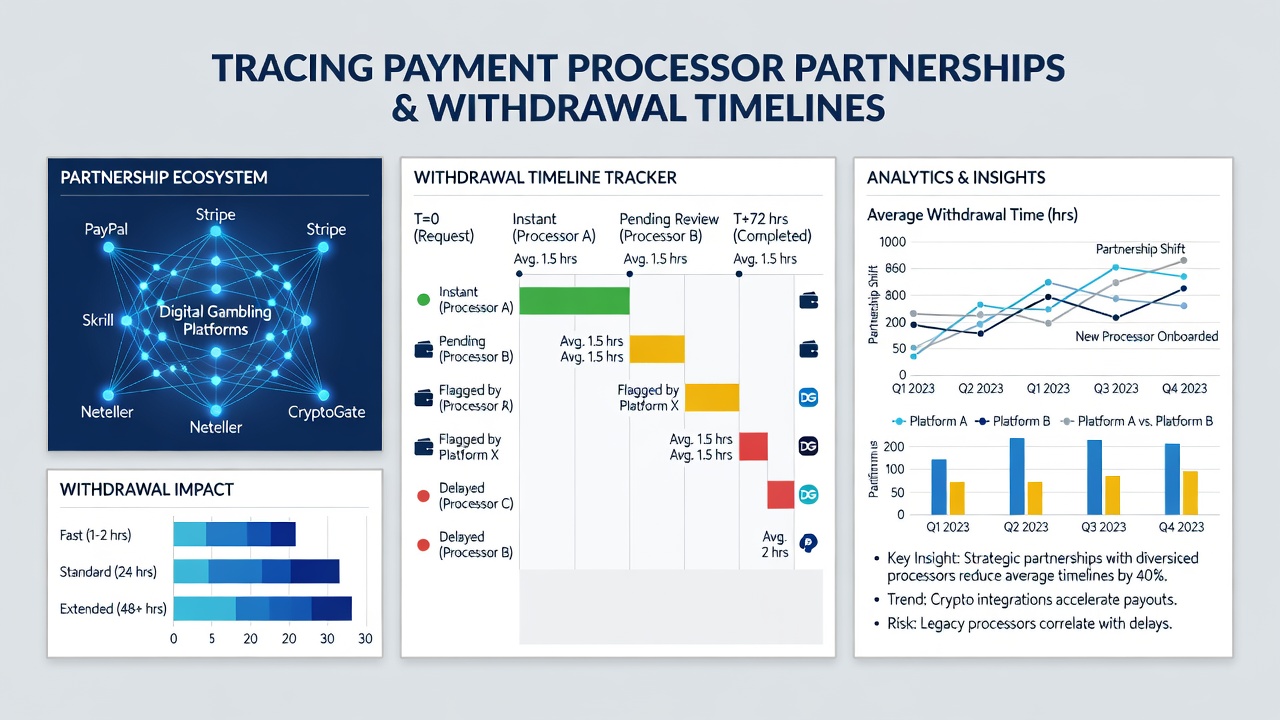
Stablecoin processors have entered the market with partnerships that bypass conventional banking hours, and several platforms now offer 24-hour processing for crypto-linked withdrawals. A 2025 academic review of transaction records from North American sites indicated that blockchain-based options averaged under two hours once the initial wallet verification cleared. Yet these arrangements still require operators to manage volatility buffers and obtain separate approvals from regulators in markets where digital assets remain restricted. Industry groups such as the European Gaming and Betting Association have published guidelines on integrating such processors while maintaining consumer protection standards.
Looking Ahead to Mid-2026 Adjustments
Scheduled changes in several jurisdictions during July 2026 include mandatory faster-funds rules for approved processors, and operators are already testing enhanced APIs to meet those deadlines. Platforms that maintain diversified partnerships expect to route withdrawals dynamically, selecting the fastest compliant path for each player based on location and verification status. Figures from a University of Nevada study on gaming operations suggest that operators with at least three active processor relationships achieve the most consistent payout performance across regions.
Conclusion
Payment processor partnerships continue to evolve as technology and regulation intersect, and withdrawal timelines reflect those shifting alliances more than any single operational decision. Platforms that align their processor networks with regional requirements and emerging settlement tools maintain competitive payout speeds while satisfying oversight demands. Data from multiple markets shows that the structure of these partnerships, rather than platform size alone, largely determines how quickly players receive funds after approval.